

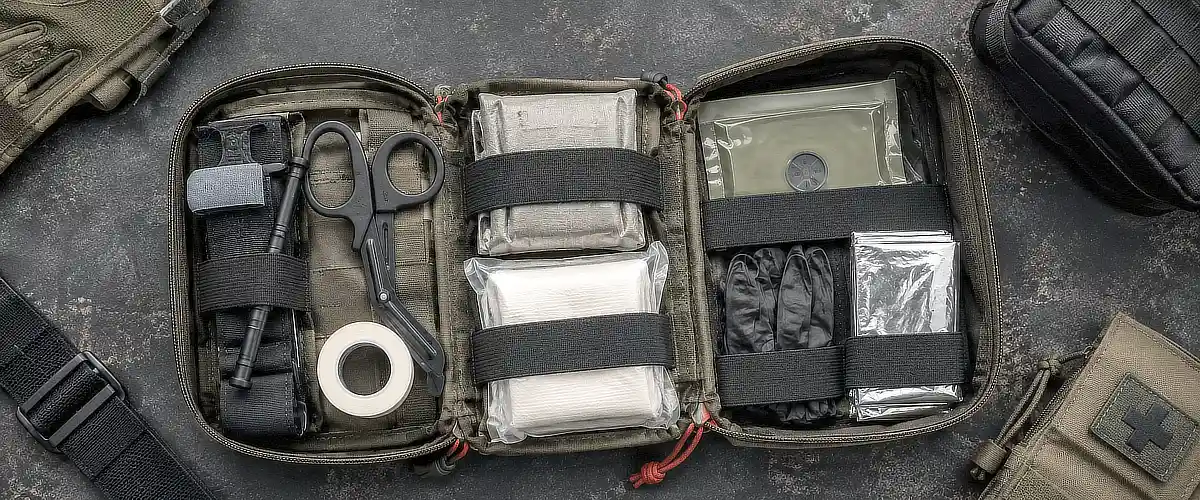

A basic first aid kit is great for small cuts, burns, blisters, and everyday injuries. A trauma kit is different. Its job is to give you the tools needed for injuries that can become life-threatening quickly, especially severe bleeding.
For a practical trauma kit, I want equipment for three major problems: severe bleeding from an arm or leg, a deep wound that may need packing, and a serious open chest wound. That means more than Band-Aids and antiseptic wipes.
Here is my basic trauma kit list:
- Nitrile gloves
- Quality tourniquet
- Hemostatic gauze
- Compressed or plain packing gauze
- Pressure dressing
- Trauma shears
- Vented chest seal
- Medical tape
- Emergency blanket
This is not meant to replace an ordinary first aid kit. I consider it a separate kit for the injuries where controlling serious bleeding and getting professional help quickly are the priorities.
If I were buying one trauma item first, it would be a quality tourniquet.
As an Amazon Associate I earn from qualifying purchases (no extra cost to you).
→ North American Rescue C-A-T Tourniquet
When someone is bleeding badly, fancy equipment farther down in the bag does not matter much if you cannot control the bleeding.
The American Red Cross teaches direct pressure, wound packing when appropriate, and tourniquet use for life-threatening bleeding from an arm or leg. ACS Stop the Bleed teaches the same three basic bleeding-control skills.
That is why most of my trauma kit revolves around controlling blood loss.
A tourniquet is intended for life-threatening bleeding from an arm or leg. This is one item where I would not go bargain hunting.
The C-A-T, or Combat Application Tourniquet, is a good example of a purpose-built tourniquet. The SOFTT-W is another established design.
I also prefer a real tourniquet over planning to improvise one after an accident has already happened. If I am assembling the kit ahead of time, I want the proper tool already there.
The important part is knowing how to use it. A tourniquet sitting unopened in a pouch is much less useful than one you have trained with.
Hemostatic gauze is designed to assist blood clotting while pressure is applied to a serious wound.
QuikClot is probably the best-known example. These products are particularly useful when you are dealing with a wound that may need to be packed and a tourniquet cannot be used.
A common example would be a serious wound near the groin or shoulder.
Hemostatic gauze does not eliminate the need for pressure. Red Cross guidance still emphasizes firm direct pressure over the wound, with hemostatic dressing used when available.
→ QuikClot Gauze (Amazon)
I already have a separate article that goes into more detail:
👉 How To Stop The Bleeding With QuikClot
I would also carry ordinary sterile compressed gauze.
Why carry plain gauze if you already have QuikClot? Because wounds can consume a surprising amount of material, and plain gauze gives you additional packing and dressing material without using your more expensive hemostatic gauze for everything.
ACS Stop the Bleed teaches wound packing as one of the basic ways to control severe bleeding.
This is a simple, lightweight item that deserves space in a trauma kit.
An Israeli-type emergency bandage combines a wound pad with an elastic wrap that can apply pressure and hold the dressing in place.
I like this type of bandage because it puts several functions into one compact package. It can be particularly useful after the initial bleeding has been controlled and the wound needs to remain securely dressed.
→ Israeli Bandage / Emergency Pressure Dressing (Amazon)
I already have detailed instructions for this item, so I would not try to duplicate all of that here:
👉 How To Use an Israeli Bandage To Stop Severe Bleeding
Learn how to use one before you need it. Trying to figure out unfamiliar medical gear during an emergency is not a good plan.
The smaller supporting items are easy to overlook. They can still make the rest of the trauma kit much easier and safer to use.
I would keep at least a couple pairs of nitrile gloves in the kit.
Blood creates an exposure risk for the person helping, so personal protective equipment should be easy to reach. Red Cross emergency steps specifically include using appropriate PPE when responding to severe bleeding.
I would put the gloves near the top of the pouch rather than burying them underneath everything else.
Trauma shears, sometimes called EMT shears, are made for quickly cutting through clothing and other material so you can expose an injury.
The blunt tip is one reason they work well around an injured person. They can also cut bandages, tape, and some heavier materials.
Your ordinary household scissors are better than nothing, but actual trauma shears are inexpensive and designed for this job.
→ North American Rescue Trauma Shears (Amazon)
A roll of good medical tape takes very little room.
It can help secure gauze or other dressings and gives you some flexibility when the wound does not fit neatly into what you expected.
It is one of those simple items that I would rather have and not need than need and not have.
A compact emergency blanket weighs almost nothing and takes very little space.
Someone with major blood loss also needs protection from becoming cold while waiting for medical help. Red Cross severe-bleeding guidance specifically includes keeping the injured person from becoming too cold or overheated.
For that reason, I think a small emergency blanket belongs in a serious trauma kit.
I would include a vented chest seal, especially in a trauma kit carried around firearms, chainsaws, vehicle travel, remote work, or other situations where penetrating injuries are possible.
→ HyFin Vent Chest Seal (Amazon)
However, I want to be careful about how this item is described.
An open chest wound is a medical emergency. Current American Red Cross guidance says reasonable first-aid options can include leaving the wound exposed to air, using a clean nonocclusive dressing, or using a specialized vented chest seal. If a dressing is used, breathing should be watched closely and the dressing loosened or removed if breathing worsens.
In other words, a chest seal is not something I would treat as a simple “stick it on and problem solved” item.
This is another good reason to get actual trauma first-aid training rather than relying only on the gear in the pouch.
I keep the two ideas separate.
A regular first aid kit handles the injuries that happen far more often: small cuts, scrapes, burns, blisters, splinters, minor wounds, and similar problems.
A trauma kit is much more focused. Its purpose is to give you quick access to equipment for serious bleeding and other major injuries while emergency medical help is on the way.
There is certainly some overlap. Gauze and gloves may appear in both.
But I do not want to dig through 100 adhesive bandages, ointment packets, and aspirin trying to find my tourniquet.
That is why I prefer keeping the critical trauma equipment together and easy to reach.
Think about where a serious injury is most likely to happen in your own life.
For me, some obvious places include a vehicle, workshop, tractor or equipment area, shooting range bag, hunting gear, ATV or off-road vehicle, and a backpack used in remote country.
Other situations could include:
- Chainsaw and power-tool work
- Hiking and backcountry camping
- Hunting and shooting sports
- Motorcycle or ATV riding
- Farming and rural work
- Overlanding and remote travel
- Automobile accidents
The best trauma kit in the world will not help much if it is sitting at home while you are several miles away.
I also would not bury it underneath other gear. Make it identifiable and accessible.
There is always another medical gadget you could put in a trauma bag.
I would rather have a smaller kit containing equipment I understand than a large tactical medical pouch filled with things I have never practiced using.
The ACS Stop the Bleed program teaches three very practical skills: applying direct pressure, packing a wound, and applying a tourniquet. Red Cross first aid training is another good option.
I would stop the civilian trauma kit at that level rather than adding advanced airway equipment, decompression needles, or other gear intended for people with appropriate medical training.
Practice with your equipment before an emergency.
Do not assemble a trauma kit, toss it behind the truck seat, and forget about it for ten years.
Check the packaging. Look for damage, moisture, contamination, and expiration dates. Replace anything that has been opened, damaged, used, or expired.
The Red Cross recommends reviewing first aid kits annually and replacing expired or damaged contents.
This also gives you a chance to make sure nothing important disappeared after the last time the kit was opened.
Trauma shears are used to quickly cut away clothing, seatbelts, or gear so you can see and reach an injury. Their blunt tip helps reduce the chance of injuring the person while cutting close to the skin.
An Israeli bandage is a pressure dressing used to help control serious bleeding and keep firm pressure on a wound. It combines a sterile pad with an elastic wrap and built-in pressure applicator. Deep wounds may also require wound packing or other bleeding-control methods.
A hemostatic dressing can be used for life-threatening bleeding, especially from a deep wound where a tourniquet cannot be used, such as the groin or armpit. The dressing is packed into the wound when appropriate, and firm direct pressure is still applied.
A vented chest seal is designed to cover an open chest wound while allowing trapped air to escape through the vent. An open chest wound is a medical emergency, so call 911 and closely monitor the person’s breathing while waiting for help.
A tourniquet is used for life-threatening bleeding from an arm or leg. Apply a proper commercial tourniquet if the bleeding is severe enough to threaten the person’s life, and get emergency medical help immediately. Training beforehand is strongly recommended.
A regular first aid kit is mainly for common injuries such as small cuts, scrapes, burns, and blisters. A trauma kit focuses on potentially life-threatening injuries, especially severe bleeding, and typically includes items such as a tourniquet, packing gauze, pressure dressing, and trauma shears.
Yes. Regular gauze can be used to pack a severe bleeding wound when appropriate. Hemostatic gauze contains an agent that helps promote clotting, but ordinary gauze is still useful for wound packing and direct pressure.
A trauma kit does not need to contain dozens of items.
For me, the priority is stopping severe bleeding and having the basic equipment needed until professional help arrives. That starts with a quality tourniquet, gauze, a pressure dressing, gloves, and the training to use them.
Trauma shears, a vented chest seal, medical tape, and an emergency blanket round out a practical kit without turning it into a full medical bag.
Most importantly, learn how to use what you carry.
Gear is useful. Knowledge and practice are what make the gear useful.
Read the full article here
