


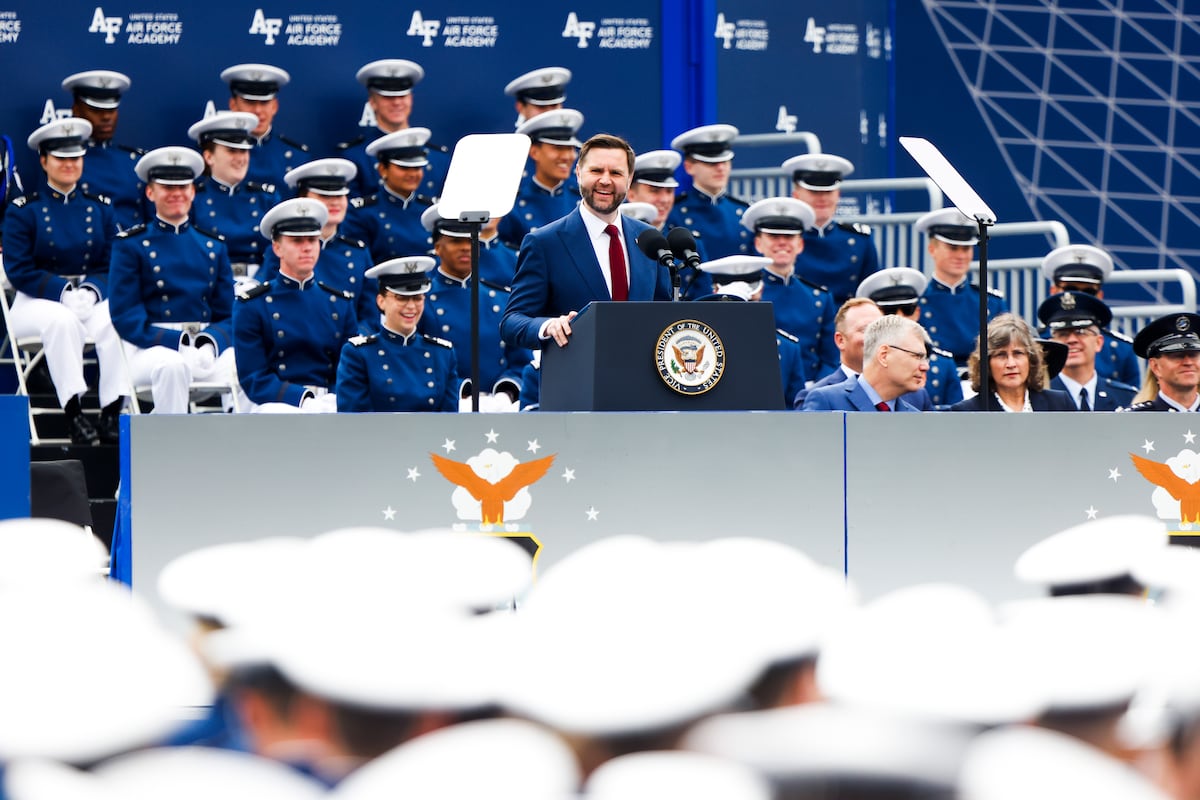

Vice President JD Vance cautioned U.S. Air Force Academy graduates to not allow artificial intelligence to take over their autonomy in warfare decision making.
At the academy’s Thursday graduation ceremony in Colorado Springs, Colorado, Vance urged cadets to dictate their own decisions and not “submit” to AI as the technology continues to change warfare.
“As AI transforms the battlefield in some ways positively, in some ways not, I ask that you be jealous and selfish about your role as the decision maker in warfare,” Vance said in a commencement address.
“You are the masters of warfare. And both your minds, but also your hearts, are the opposite of artificial,” Vance continued.
Vance discussed the recent commencement addresses given by corporate leaders around the country that have gone viral online after graduates have booed them once they spoke about the benefits of AI, calling Americans’ worries over the technology’s impact on the labor market, resources and social effects understandable.
The vice president also referenced the recently released Pope Leo XIV’s Encyclical Letter that explains how society must “disarm” AI, saying it needs to be prevented from “dominating humanity.”
Vance said he endorsed the sentiment that human beings can not outsource the “most important moral decisions to digital technology.” He said that what makes American warfighters unique is how the country wages war “justly,” saying that it is the service members who guarantee lethality coexists with heart and conscience in war.
“If the warfare of the future is to live up to the moral values of our ancestors, decisions over life and death must be made by humans and not machines,” Vance said in the address.
RELATED
Recently, the Air Force has made strides to recruit and train AI professionals, aligned with the Defense Department’s grander strategy to advance the nation’s AI capabilities. The Pentagon has pushed AI platforms across the military in an effort to become an “AI-first” force.
The reliance on AI has cast doubt about the reliability of the systems, especially after roughly 168 people were killed in a strike on an elementary school by a Tomahawk cruise missile on Feb. 28, the first day of the Iran war. U.S. officials have not yet acknowledged full responsibility for the strike but have said that the incident is under investigation.
The Trump administration has sought an executive order requiring AI models to receive government oversight and review, but President Donald Trump postponed signing the order, citing his concern to reporters last week with the U.S. falling behind competitors, such as China, in the AI race.
Cristina Stassis is a reporter covering stories surrounding the defense industry, national security, military/veteran affairs and more. She previously worked as an editorial fellow for Defense News in 2024 where she assisted the newsroom in breaking news across Sightline Media Group.
Read the full article here
