


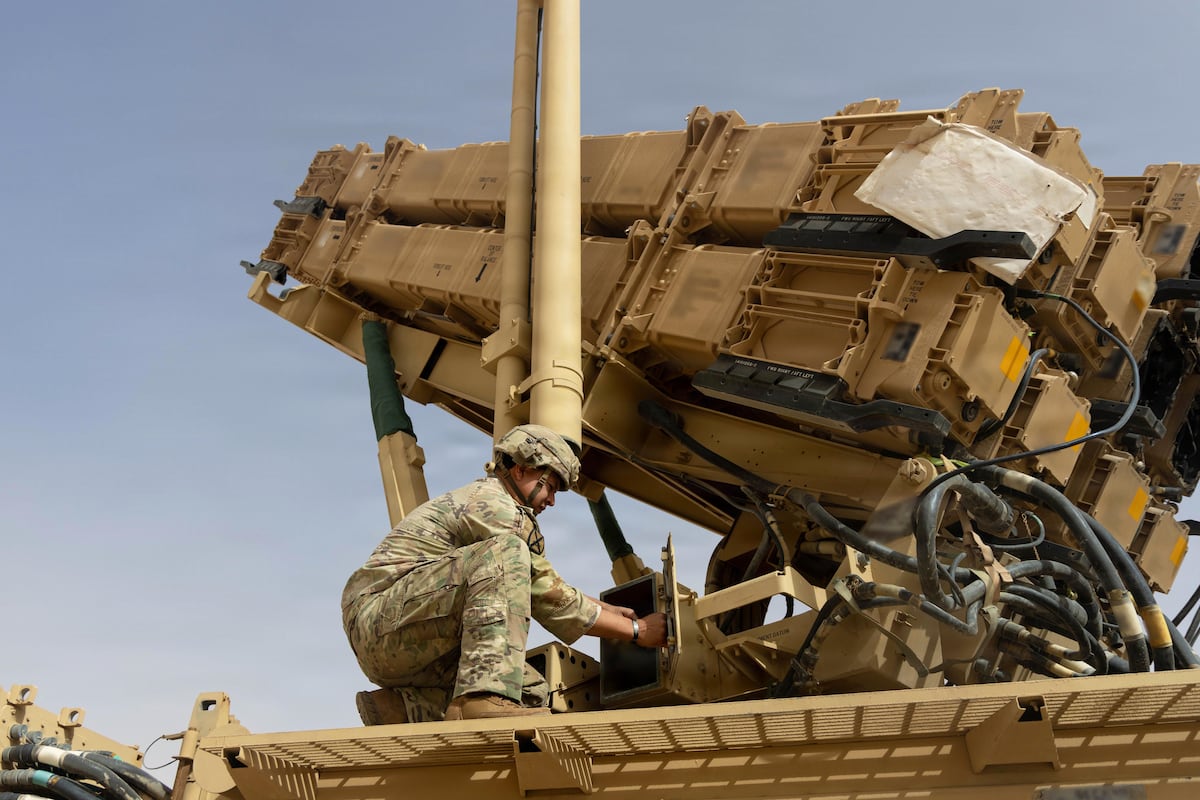

ANKARA — President Donald Trump said on Wednesday that the United States will give a license to Ukraine for Patriot missiles as he said both Russia and Ukraine want to see the war settled.
“We’re going to give a license to you to make Patriots. That’s pretty cool. This way, you can’t complain that we’re not giving ‘em enough,” Trump said at a meeting with Ukrainian President Volodymyr Zelenskyy at the NATO summit in Ankara.
“It’s a defensive weapon, which I like better than an offensive weapon,” Trump said.
The U.S. president’s comments were quickly picked up by Russian state media, which keeps a keen eye on all news coming out of the NATO summit in Ankara.
Initial reporting was factual and brief, relaying the American president’s decision verbatim. State-aligned media had previously panned the idea as reckless and amplified Western skeptical voices calling the move a risk to U.S. national security over concerns the technology could fall into Russian hands.
Russia’s foreign ministry has criticized the Trump administration for continuing to back Ukraine, with Moscow’s Foreign Minister Sergey Lavrov saying that Washington was giving up its role as an “honest broker” and shifting back toward more decisively supporting Kyiv.
Reporting by the FT from late June indicated that this was causing disillusionment with Trump amongst Putin’s close associates.
Wednesday’s announcement comes just days after Kremlin spokesperson Dimitry Peskov dropped Russia’s longstanding euphemism of the “special military operation” in Ukraine. Instead, speaking to Russian media on Sunday, it had become a “real war” due to the involvement of Western nations, Peskov said.
While Trump was unambiguous in Ankara about the licensing offer, some specifics would remain to be worked out with the U.S. contractors involved. It was unclear, for example, which type of interceptor missile – the simpler PAC-2 or the more capable PAC-3 – Trump intends to allow Ukraine to build.
Zelenskyy has repeatedly pleaded for the U.S.-made interceptors — the only weapon in Ukraine’s arsenal that can shoot down ballistic projectiles, whose high velocity and steep flight path make them difficult to stop.
He was expected to raise the issue with Trump during their meeting.
Trump said pressure could be applied to companies to produce Patriot missiles. “We have great power over the companies, those companies that make the Patriot,” he said.
“We haven’t informed the company of that yet, but that’ll work out all right. I’m sure they will be thrilled,” he said.
Lockheed Martin is the prime contractor for the interceptor missiles that go in the Patriot system.
Russia fired ballistic missiles at Kyiv again overnight, officials said on Wednesday, a third attack on the Ukrainian capital in less than a week exploiting Ukraine’s critical shortage of U.S.-made air-defense interceptors.
While Ukraine’s air defenses intercepted 139 of the 169 drones during the overnight strikes on the country, they were again unable to down any of the five ballistic missiles used by Russia, air force data showed.
Trump said both sides in the war would like to see it end, but Russia’s Vladimir Putin and Ukrainian President Volodymyr Zelenskyy have both been “difficult.”
“We’ve settled a lot of wars, and this one is the one that I thought maybe would be the easiest, but Putin is a difficult character, and this guy’s a difficult character,” Trump said, referring to Zelenskyy, who was sitting next to him.
Zelenskyy said he wanted to discuss “some very important details” with Trump.
“I’m sure you will do everything to stop this war,” he told Trump.
Moscow has stepped up its air war on Ukraine in recent months as its ground advances have largely stalled and Ukrainian attacks on its military logistics and oil industry triggered widespread fuel shortages.
Linus Höller is Defense News’ Europe correspondent and OSINT investigator. He reports on the arms deals, sanctions, and geopolitics shaping Europe and the world. He holds master’s degrees in WMD nonproliferation, terrorism studies, and international relations, and works in four languages: English, German, Russian, and Spanish.
Read the full article here
