


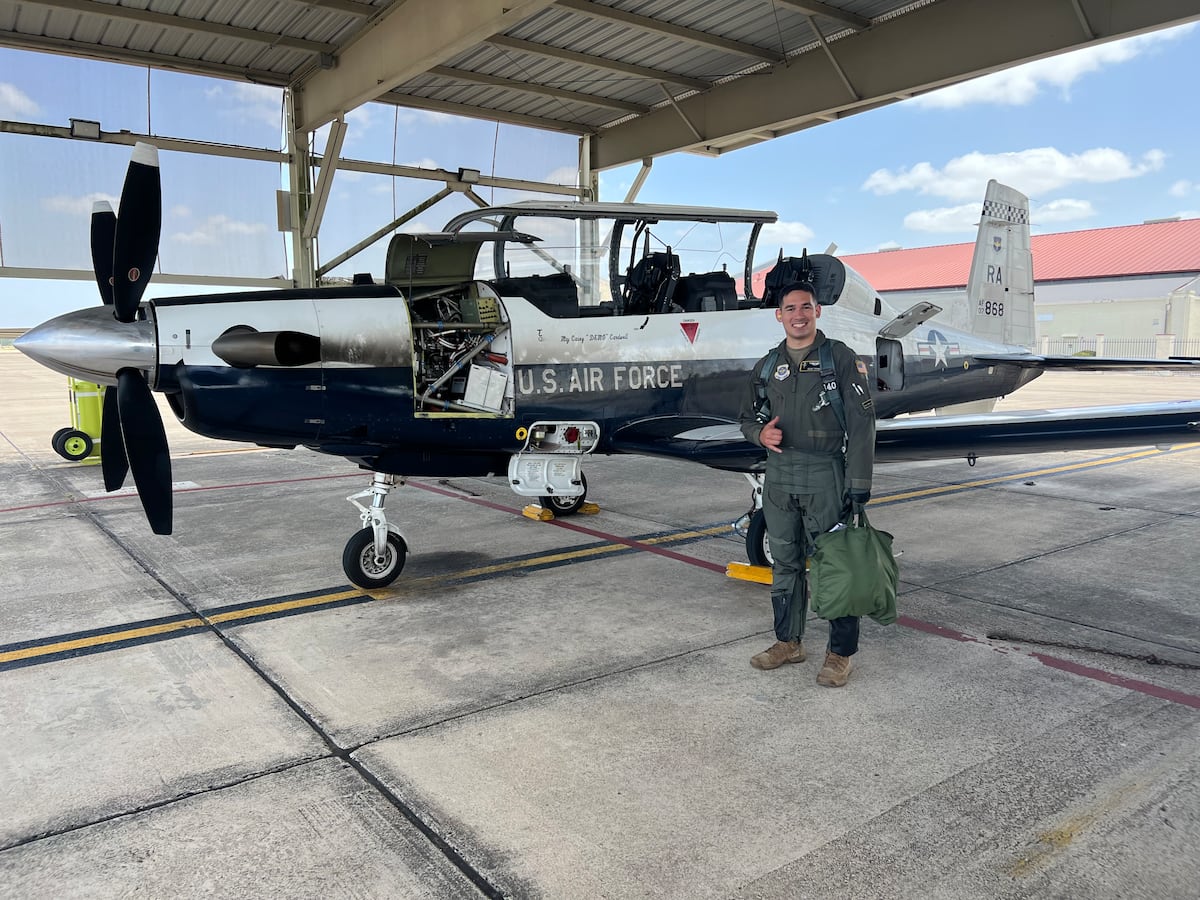

Every morning, Chelsea Thomas wakes up married, but alone. Her husband, an Air Force service member, has spent the past three years living more than 600 miles away because of military orders. While he relocated to his next assignment, Thomas remained in Florida with their children, preserving careers, school routines and the life they had built.
It isn’t a deployment. For the Thomas family, it’s simply military life. For generations, military families were expected to pack up together every time orders arrived. Today, some families are making a different calculation.
Rather than uprooting children’s schools, abandoning established careers, leaving specialized medical care or disrupting custody arrangements, they are maintaining separate households while remaining married, a practice military families often call “geo-baching,” short for geographic bachelorhood.
“Well, you made this choice”
Thomas never imagined living hundreds of miles from her husband. Friends often assume deployments are the hardest part of military life. She disagrees. “To the outside world, you’re still married, your spouse is safe and life appears normal,” Thomas said. “For most we hear, ‘Well, you made this choice,’ but normal is not the word I would use to describe raising children, maintaining a home, nurturing a marriage and carrying the weight of everyday life from different states.”
For Thomas, remaining in Florida preserved two careers, her children’s routines and the support system the family had built.
As Thomas began sharing her family’s experience, military spouses from every service branch reached out with similar stories. Some remained behind to preserve careers or children’s educational stability. Others stayed because of specialized medical care, or support networks.
Those conversations led Thomas to found Family in Flight, a nonprofit that provides peer support, resources and travel assistance to geographically separated military families. She said the organization has connected with hundreds of spouses navigating long-distance marriages shaped not by deployment, but by military life itself.
Jeanne Caruso wanted nothing more than to accompany her husband to his assignment in Okinawa. Instead, she remained in the United States because the specialized care she relies on to manage epilepsy would not be available there. Moving overseas, she said, could place her health at significant risk.
For Navy spouse Tiffany Nguyen, the decision centered on her son. The family was preparing for an overseas move when they learned their child had been deemed unsuitable for permanent change of station by DoDEA based on his Individualized Education Program. Nguyen said she is challenging the determination, arguing that it contains significant discrepancies. She said the family was told schools overseas would be unable to meet her son’s educational needs.
The circumstances differ. The outcome does not. Each family found itself weighing military orders against another responsibility they were unwilling or unable to leave behind.
Although the Defense Department does not track voluntary geographic separation among married service members, Blue Star Families has documented the practice before. In its 2015 Military Family Lifestyle Survey, one in five active-duty family respondents reported choosing geographic bachelorhood at least once during their military career. The most common reasons were a spouse’s career, short military assignments and children’s education.
More recent Blue Star Families research no longer measures geographic bachelorhood specifically, but many of the pressures remain. The organization’s 2025 Military Family Lifestyle Survey identified military spouse employment, military pay, time away from family and dependent children’s education among the leading quality-of-life concerns for active-duty families. Nearly seven in 10 respondents said two incomes were essential to their family’s financial well-being.
A different kind of separation
From the outside, geographic separation can look manageable. Children still go to school. Service members remain stateside. There are no deployment ceremonies or homecomings marking the separation on the immediate calendar.
Inside those households, spouses describe something very different. Thomas handled school pickups, doctor’s appointments, home repairs, sports schedules and sick days without her husband physically present. Parenting conversations happened by phone. Milestones unfolded over video calls.
“It looked like sitting alone at night after the kids were in bed and realizing there was no one else in the house to share the day with,” she said.
Deployment brings family readiness groups, organized community support and a shared understanding that the separation is temporary. Geographic separation often does not.
“When a service member deploys, people understand the sacrifice,” Thomas said. “There are support groups, resources and conversations surrounding that experience. Geo-baching often exists in the shadows.”
A category that doesn’t officially exist
Military families have long navigated involuntary separations through deployments and unaccompanied overseas tours, where the Defense Department determines a service member cannot bring dependents because of mission requirements or host-nation restrictions.
Geographic bachelorhood is different.
Because the arrangement is generally voluntary, the Defense Department does not recognize “geo-bachelor” as an official personnel status or maintain department-wide data on how many families live this way. Married service members who voluntarily relocate without their dependents are generally governed by existing housing and installation policies rather than a separate geo-bachelor program.
Thomas said she still believes her family made the right decision, even though it came at a cost. “We were grateful for the opportunity, the career and that we still had each other through all of that,” she said. “Both realities can exist at once and that is OK.”
Read the full article here
