


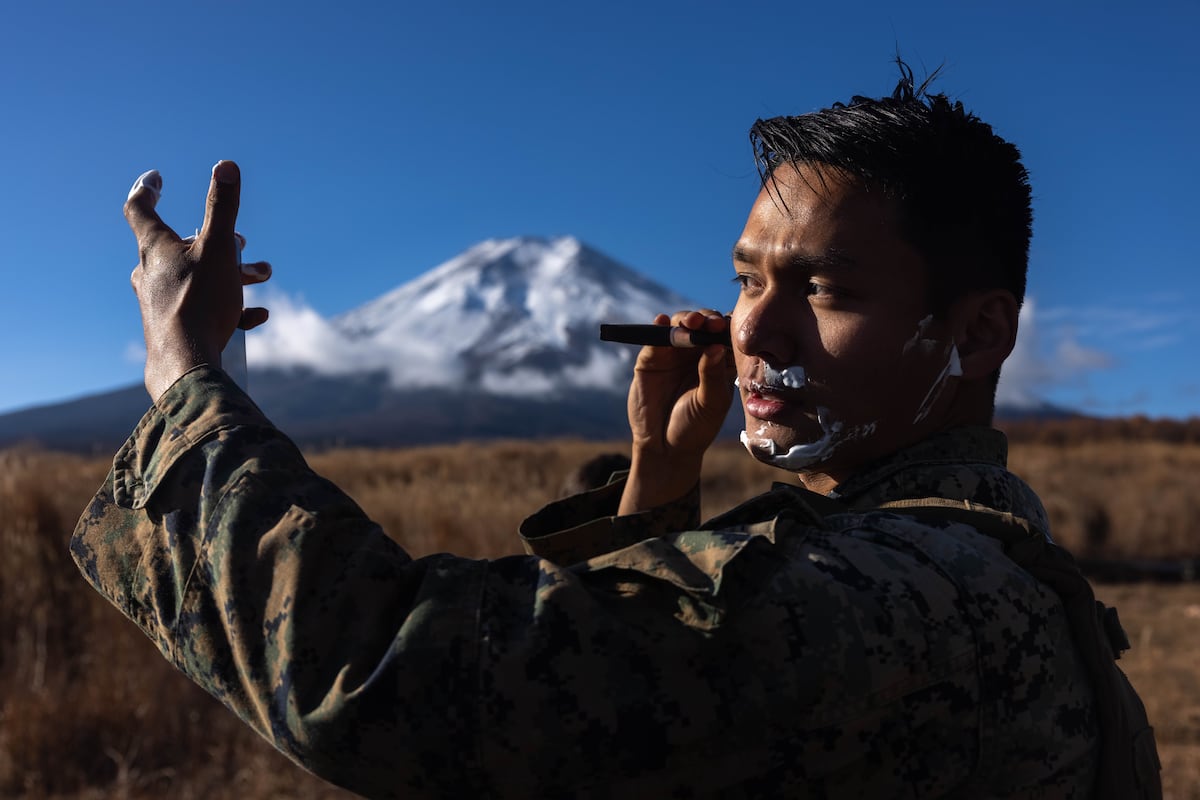

The U.S. Navy announced that it is implementing new procedures to redetermine whether individuals will be granted religious waivers to grow facial hair that doesn’t adhere to military grooming standards.
The reevaluation applies to all active and reserve sailors with approved or pending religious accommodations for waivers allowing facial hair styles, as well as those looking to revisit requests for waivers that were denied previously and those submitting their first request, according to an administrative message.
“Commanding officers must objectively weigh the fundamental value of accommodating religious practices against the compelling, life-or-death interest of maintaining an absolute protective posture and ensuring the operational viability of our fleet,” the message says.
All sailors with approved or pending religious waiver requests have to resubmit those same requests now that the military is revising policy.
RELATED
The Defense Department released a memorandum in mid-March requesting proof of “sincerely held religious beliefs” if a service member is to qualify for religious exemptions.
In order to prove their faith, service members are required to provide written testimony regarding the sincerity of their religious beliefs, as well as how clean-shaven grooming standards conflict with those beliefs.
Sailors submitting religious accommodation requests for facial hair have 10 business days to inform their command that they plan to resubmit a new request.
Those requests will be processed by command and undergo a review by a chaplain, who will determine the veracity of the religious belief the sailor is claiming as their reason for the waiver.
Commands have 30 days from the time sailors submit their religious accommodation requests to reevaluate them.
The Navy said it will provide follow-up updated instruction on proper grooming standards for service members.
Riley Ceder is a reporter at Military Times, where he covers breaking news, criminal justice, investigations, and cyber. He previously worked as an investigative practicum student at The Washington Post, where he contributed to the Abused by the Badge investigation.
Read the full article here
