



Heating a chicken coop in winter can be risky if done wrong. Dust, bedding, feathers, and confined spaces create a real fire hazard, and many chicken keepers have learned this the hard way.
After researching dozens of options and using radiant heaters for multiple winters, including sub-zero temperatures down to -19°F, this guide explains the safest way to heat a chicken coop, what actually works, and what to avoid.
What is the safest chicken coop heater?
The safest chicken coop heater is a wall-mounted radiant panel heater paired with a thermostat. Radiant heaters do not reach ignition temperatures, reduce fire risk, and provide gentle warmth without overheating the coop.
Many people ask:
- Do chickens need heaters in winter?
- Should I heat my chicken coop at all?
The honest answer: most adult chickens do not need heat if the coop is:
- Dry
- Well-ventilated
- Properly insulated
- Free from drafts
That said, extreme cold, high winds, frostbite-prone breeds, or large combs can change the equation. In very cold climates, a safe, low-wattage heat source can help reduce frostbite and stress without overheating the birds.
The key is safe heat.
Here are several ways people attempt to heat coops. Some are safer than others.
Heat lamps:
- Get extremely hot
- Can fall or be knocked loose
- Ignite dust and bedding easily
They remain one of the leading causes of coop fires and should only be used with extreme caution, and ideally never for adult chickens.
Radiant heaters:
- Warm surfaces and bodies, not air
- Do not reach ignition temperatures
- Can be wall-mounted and kept out of reach
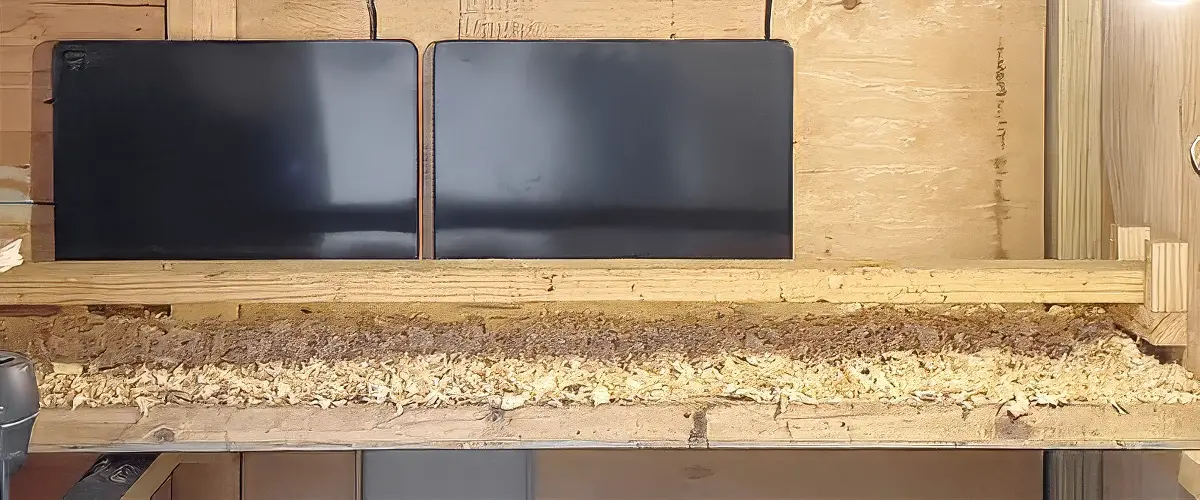
This is the type of heater I use and recommend.
[ Read: Chicken Feed Storage For Winter Months – How Many Bags of Pellets? ]
I chose a flat-panel radiant chicken coop heater because:
- It does not get hot enough to combust
- It provides gentle radiant warmth
- It can be mounted securely on the wall
- Chickens naturally gravitate toward it on cold nights
Visually, it looks like a small flat-screen TV, and yes, the chickens seem oddly fascinated by it.
As an Amazon Associate I earn from qualifying purchases.
(no extra cost) Thank you
This is the latest model:
→ See the fire-safe radiant heater I use (Amazon)
The radiant heaters I use have:
- 100-watt (low)
- 200-watt (high) settings
Most of the winter, 100 watts is sufficient, especially in an insulated coop. During extreme cold snaps, switching to 200 watts provides extra margin without excessive power usage.
Radiant heat is efficient because it targets the birds, not the entire air volume of the coop.
Many coop heaters do not include a thermostat, which means they run constantly if powered.
To solve this, I use an external temperature controller:
- Turns the heater ON at ~25°F
- Turns it OFF at ~32°F
- Prevents unnecessary runtime
- Reduces fire risk and electricity use
→ See the temperature controller I use (Amazon)
This setup allows the coop to stay just warm enough — without overheating or drying out the air.
Healthy adult chickens tolerate cold surprisingly well, but risk increases when:
- Temperatures drop below 0°F
- Wind chill enters the coop
- Moisture builds up from respiration
During a severe cold snap:
- Outside temp: -19°F
- Inside coop temp: ~22°F
- Heat increase: ~40°F
That difference prevented frostbite and kept the birds active and healthy. My coop is insulated (see link to that article below).
If you choose to use a heater, follow these rules:
- ✅ Use radiant or flat-panel heaters only
- ❌ Avoid space heaters and propane heaters
- ❌ Avoid heat lamps whenever possible
- ✅ Secure heaters to walls — never free-standing
- ✅ Use a thermostat controller
- ✅ Keep all wiring protected
- ❌ Never block ventilation
Important: Never fully close coop vents in winter. Moisture buildup causes frostbite faster than cold air.
A well-insulated coop:
- Holds warmth longer
- Requires less wattage
- Reduces heater runtime
If you haven’t insulated your coop yet, read this first:
[ Read: Chicken Coop Insulation | How I Am Insulating And What I’m Using ]
| Heater Type | Fire Risk | Efficiency | Recommended |
|---|---|---|---|
| Radiant Panel Heater | Very Low | High | ✅ Yes |
| Heat Lamp | High | Medium | ❌ No |
| Space Heater | Very High | Low | ❌ No |
| Propane Heater | Extreme | High | ❌ Never |
Yes — if you use radiant heaters, proper mounting, and a thermostat.
Radiant panel heaters combined with insulation and ventilation.
It’s strongly discouraged due to fire risk.
Most chickens remain safe above 20–25°F, especially in dry, well-ventilated coops.
Most chickens don’t need heat. But when extreme cold hits, a safe chicken coop heater can make a meaningful difference.
Radiant heat panels paired with insulation and a thermostat offer:
- Minimal fire risk
- Low electricity usage
- Proven real-world performance in sub-zero conditions
If you heat your coop, do it safely — or don’t do it at all.
▶ Check today’s price for this winter-safe coop heater
One more thing… They say if you feed chickens cracked corn, they will stay warmer at night. Something about digestion. So that’s what we do:
[ Read: How To Get Chickens To Lay Eggs During The Winter ]
Read the full article here
